6) If you befriend dogs at stables they’ll sometimes lead you to buried treasure chests.
7) If you feed your horse an Endura Carrot it will have more dash charges when you mount it.
8) You can ride a bear. And a moose. And a deer. zelda breath of the wild case
9) You can (very briefly) mount and ride a Lynel. They don’t like it very much.
10) You can ride an enemy’s skeletal BOTW Switch Case undead horse.
11) If you try to take said horse to a stable to board it, the employees will freak out and not allow you to.
12) Link has a custom flexing idle animation if he doesn’t have a shirt equipped.
13) If you throw a boomerang at a Lizalfos, their weapon of choice, they’ll just catch it and use it against you. zelda breath of the wild case
14) If you drop raw meat on the ground on Death Mountain, it’ll instantly turn into steak. wario plush toy
15) You can break the ice blocks bosses thrown at you with Cryonis — no need to spend all your arrows.
16) If you disarm a tough enemy and drop a leaf or other weak weapon in front of them, they’ll pick it up and use it.
17) If you shoot a Hinox’s single eye two times he’ll start shielding it with his hand, making the fight more challenging.
18) If you crawl onto a sleeping Hinox’s hand he’ll eventually lift you onto his belly to scratch himself. Then if you’re careful you can loot their necklace without fighting them.
19) You can burn off a Hinox’s leg armor to do more damage to it with your weapons.
20) Bokoblins and other monsters can be distracted by apples or other food you drop and will rush over to eat it. zelda breath of the wild case
21) A certain rare NPC sells monster masks that you can equip to infiltrate enemy camps without aggroing them. It is unsettling.
22) Shooting a metal box in an enemy camp with an electric arrow creates a huge damaging electric field.
23) You can drop and detonate bombs while parasailing over enemy camps.
24) Bomb arrows don’t work in the rain — they just fizzle out.
25) You can farm bomb arrows this way. Find a camp where the sentries wield bomb arrows, and go there in the rain. You can pick up all their unexploded shots.
26) On the other hand, bomb arrows taken out in extremely hot environments will instantly detonate. zelda breath of the wild case
Zelda Breath of the Wild Switch Case
There’s a lot more to Zelda than you might think—and here are eight fun facts to prove it.
1/ Though they all share the title of Princess Zelda, Zelda isn’t just one person. Throughout the various games, Zelda is almost always a different person, but all are royalty descended from Skyward zelda breath of the wild case Sword’s original Zelda, who was the mortal incarnation of the goddess Hylia. While she’s usually blonde, Zelda has also been BOTW Switch Case a brunette and a redhead. Link is nearly always a different Link, too.
2/ The Legend of Zelda creator Shigeru Miyamoto says that he borrowed the princess’ name from the wife of author F. Scott Fitzgerald. He explained that Zelda Fitzgerald was beautiful and beloved by many, and he liked the sound of the name, so it was an obvious choice.
3/ The late actor Robin Williams named his daughter Zelda after the princess from the games. The two even appeared together in commercials for The Legend of Zelda: Ocarina of Time 3D.
“To tell you the truth, we had begun the initial steps towards creating Wind Waker 2 around that time. However, demand for a more Ocarina-like game was growing by the day. We did our very best with zelda breath of the wild case Wind Waker, and put everything we had into it… However, Wind Waker 2 would have taken place in a more land-based setting, rather than on the sea, so that we could have Link gallop across the land on a horse.
But Link’s proportions in Wind Waker weren’t very well suited for riding on horseback, he was too short, and an adult version of Toon Link did not seem appropriate either. So, while we were stuck on those problems, we became aware of the greater demand for a more realistic, taller Link. zelda breath of the wild case High-budget live-action fantasy movies were also huge at the time, so with all BOTW Switch Case things considered, we decided to have at it. I was on board with the project as art director, and started off by bringing [Yusuke] Nakano on to do the design for Link.”
In the Italian release of the game, Tetra is named “Dazel”, which is an anagram of “Zelda.”
Since Link is left-handed in this iteration, he holds the Wind Waker in his left hand, while a conductor would zelda breath of the wild case more properly hold the baton in their right hand. Despite this he still uses the baton to adjust what time to play in, and his free hand to signal the pitch, just as a conductor would do, but with the opposite hands.
4/ Games in The Legend of Zelda series typically revolve around the hero, Link, in an adventure that involves protecting or rescuing Zelda. After all, the series is named after her! But there are actually three games—Link’s Awakening, Majora’s Mask and Tri Force Heroes—where Zelda is merely BOTW Switch Case mentioned, appears only in flashback or does not appear at all. zelda breath of the wild case
5/ Even though Zeldas are frequently getting captured by the bad guys, that doesn’t make her a damsel in distress. Zelda frequently plays an important role in final boss battles. On multiple occasions she has aided BOTW Switch Case Link by holding Ganon back with her magic or striking enemies with powerful light arrows. In those cases, Link couldn’t succeed without her. zelda breath of the wild case
After a seven-year hiatus, Wario Land: Shake It! was released on the Wii. As for creating the game, producers, Takahiro Harada and Etsunobu Ebisu stated that they wanted to develop the “perfect 2D gaming wario cuddly toy platformer experience” and, in doing so, created hand-drawn animations for Wario’s movements. As it stands, none of the background, or any frame, was recycled during the process. A single movement would require 30 frames of animation. This, in turn, required 2,000 frames for Wario’s individual wario plush toy move set and a whopping 6,000 frames for the combined enemy move set. It got so technical that one of the designers, Kochi Yagi, said that “the scenery alone would have filled up the Nintendo GameCube.” wario stuffed animal
Stupidity Before Fame
WarioWare was conceived by director Goro Abe, inspired by their previous title, Mario Artist: Polygon Studio. Aside from the main game, where players could create their own 3d polygon model, there were a couple of micro minigames that the player could play. Wanting to expand on the format, the creators set out to create a full game packed with “microgames” as a way to wario plush toy challenge wario stuffed animal the norm of the Nintendo game line and the brand itself. Why they chose Wario is pretty simple: he’s a moron. As producer Yoshio Sakamoto stated: “Wario is always doing stupid things and is really idiotic.” Backhanded compliment as it is, his stupidity added the sense of humor and charm to the series, making it a favorite for generations to come.
First debuting in the 2000 Nintendo 64 game Mario Tennis to polarizing reception from the media, Waluigi has since attained a cult following,[1] especially helped through his use as an Internet meme.
Waluigi’s first two appearances were in the Nintendo 64 and Game Boy Color versions of Mario Tennis, establishing himself as Luigi’s supposedly long time rival and Wario’s doubles partner, whom he would remain partners with for most future installments, the one exception being Mario Tennis: wario stuffed animal Power Tour, the only time that he appeared in-game without Wario. Since his introduction, Waluigi has appeared as a playable character in every wario plush toy Mario sports game. Notably in Mario Golf: Toadstool Tour and Mario Power Tennis, he holds up the sign for Camelot Software Planning to signify the game developers in the opening movies.
Alongside Princess Daisy, Waluigi would also join the Mario Party series starting with Mario Party 3, where he owns an island filled with traps and explosives. In the game’s story mode, he is faced as the penultimate foe after he defeats Bowser.
Mario’s original name Game designer Shigeru Miyamoto nearly called his famed character ‘Mr Video’, speculating it would be a name he’d return to with each and every title. In his first appearance in 1981’s Donkey Kong, he was known only as ‘Jumpman’, given his ability to jump over barrels. wario stuffed animal
The emergence of Mario Mario didn’t gain his famed name until Nintendo of America began marketing the Donkey Kong title for US audiences. Don James (executive VP of operations, Nintendo Of America) wario plush toy claims that they named the central character after the landlord for the company’s warehouse – Mario Segale. “We thought it would be funny to name the game character ‘Mario’ and quickly agreed it sounded great. So we informed our parent company and that’s how Mario got his name.”
WARIO PLUSH TOY SUPER MARIO TEDDY NINTENDO SOFT
Japan got a version of Excitebike that starred Mario
Excitebike: Mario Battle Stadium is easily one of the most obscure Mario titles. Released on the Super wario plush toy Famicom’s Satellaview, an early experiment in online gaming. Featuring only a few of the usual Mario characters, it was only available for download on the service, though it can still be found through less legal means.
Supercade was the first Super Mario cartoon wario stuffed animal
Think Super Mario Bros Super Show or an obscure anime film are the first Mario cartoons? Wrong, it was the forgotten Saturday morning treat Supercade, a show that featured cartoons wario plush toy based on arcade hits including Donkey Kong and Donkey Kong Junior. Pretty much out of print, you can find some of the episodes on that internet repository known as YouTube. wario stuffed animal
Bowser’s ultimate goals are to kidnap Princess Peach, defeat Mario, and conquer the Mushroom Kingdom. Since his debut, he has appeared in almost every Mario franchise game, usually serving as the main antagonist. mario bowser figure Bowser is voiced by Kenny James. In addition to his usual animated and video game appearances, he also appears in the 1993 live-action film, bowser action figure where he is portrayed by Dennis Hopper.
bowser action figure
Get Off My Woods!”
Despite having his name on the cover, Wario’s Woods did not star Wario. In fact, Wario just happens to be one of the main villains in the game. The star of the show and playable character is actually Toad. In the storyline, Toad has to stop Wario’s approaching army from taking over the woods. Wario’s Woods feels and plays in the same vein as Tetris. However, instead of waiting for bricks to fall, the player uses Toad to pick up items and stack them to make a row. Birdo too makes an appearance within the game. There were also two endings to the game: on the NES, Toad just chases Wario out of the woods. In the SNES version, bowser action figure Toad actually takes things a bit further and plants a bomb in Wario’s castle, causing the palace to collapse along with Wario. Talk about going the extra step. mario bowser figure
13) Every time Mario Takes part in a mini-game such as jump roping or volleyball, a tiny picture of Mr. Game and Watch accompanies it, representing that challenge.
“Yoshi” isn’t Yoshi’s full name
There are a lot of things we just sort of accept about Yoshi. For one, the fact that he hatches fully-formed out of the egg, complete with a built-in saddle. That, and we just sort of pretend every dinosaur that comes out of a polka-dotted egg is named “Yoshi,” even if that was the name of the guy mario bowser figure that got dumped in a bottomless pit two levels back. We can ignore these existential questions because hey, it’s a video game.
No one was really asking what Yoshi’s full name was, but apparently someone at Nintendo thought that was a more important issue to address than a dinosaur being born with shoes. An bowser action figure internal character guide unearthed by Blake Harris revealed something startling about Yoshi. wario action figure
Miyamoto named him Daimaō Kuppa. Kuppa came from the Japanese name for gukbap, a Korean dish. Miyamoto had also considered the names Yukke and Bibinba, also Japanese names of Korean dishes (육회 yukhoe and 비빔밥 bibimbap respectively). The Korean name for the character Bowser/Kuppa is not Gukbap, but 쿠파 Kupa, which is essentially a phonetic round-trip mario bowser figure translation. The name was anglicized Kuppa rather than Koopa in the Japanese versions up until the release of Super Mario World.
So, Yoshi’s full name is… “T. Yoshisaur Munchakoopas.” The T. is left ambiguous, though we could guess it bowser action figure stands for “Transportation” or “Tyrannosaurus” or “Travis.”
This has never been referenced by any official Nintendo game, but the fact of the matter is it’s still on an official Nintendo document. Of course, if everything here is true, that would also mean that Mario really is a member of the species “homo nintendonus,” in which case we’d have a lot more questions.
The levels in Super Mario Bros. Â were designed by hand on graph paper.
The tiny team of designers responsible for the creation of Super Mario Bros. on the NES, Nintendo’s Shigeru Miyamoto and Takashi Tezuka, drew the levels on “huge pieces” of graph paper to deliver to the programming team. mario bowser figure
14) New Donk City includes countless references to the Donkey Kong games, such as stores being named after Diddy Kong, or the fact that every street name is the character from the series. Even cooler is that the cars all have Donkey Kong’s original release printed on them.
He is in love with Princess Peach, and his attempts of conquest almost always include kidnapping her in one bowser action figure way or another. He also has a young son named Bowser Jr., who aids his father in his plans.
He was voiced by the late Harvey Atkin in the DIC Mario cartoons from 1989 to 1991, by Scott Burns from 2002 to 2007, and by Kenny James since 2007.
Bowser’s looks and personality have (as with most early Nintendo characters) slowly evolved over time. Most of his defining mario bowser figure characteristics have remained the same, though.
His most recognizable features are his spiked shell, red mane, and spiked cuffs, which except for the mane have been prominent features of Bowser in all of his appearances. One point of debate over the time has been Bowser’s size, which seemed to vary in every one of his appearances.
Most of the time, he is about twice the size of Mario.
His personality varies depending on his role in the plot. In the main platformers, where he is the main antagonist, he has a very dark, brutal, merciless, destructive, cataclysmic and serious disposition. For years, it was also rumored by fans that while most other Koopas prefer vegetation in their diet, Bowser’s sharp teeth, another common feature of his, were an indicator of him preferring meat, preferably from victims he hunts down and captures. Indeed, Bowser is shown mario bowser figure quite often to be an expert hunter, and his carnivorous bowser action figure side is definitively confirmed by him devouring Mario and Luigi in Mario & Luigi: Bowser’s Inside Story.
mario bowser figure
In the RPGs, he shows some more amusing and funny sides of himself, as he is shown to have a talent for sarcastic wit, works very hard to live up to the “evil king” image, and very often displays a shortsighted lack of common sense. However, the most prominent part of his personality is his confidence.
When he decides to help the other denizens of the Mushroom Kingdom against a common foe, it is mostly because of his own ego. In his mind, the only one allowed to kidnap Princess Peach, destroy Mario and/or conquer the world is himself, and he flies into a dangerous rage when other villains attempt to usurp his position as “the biggest, baddest brute around”. mario bowser figure
In the RPG games, he is shown to be a benevolent and philanthropic ruler towards his men. In Super Mario RPG, he found two of his men in Monstro Town who had happy lives there, and instead of getting angry and ordering them to return to his army, he was happy for their lives and wished the best for them.
Mario & Luigi: Bowser’s Inside Story showed that while Bowser is mean with his troops, he cares about them. He rescued imprisoned soldiers who serve him, got extremely angry when he learned that Fawful had kidnapped his men and even forgave three traitors. In the Paper Mario games, bowser action figure it is shown that Bowser’s troops follow him for respect rather than fear. In Super Paper Mario, a Hammer Bro told Peach that Bowser would fry him if he escaped without making sure that his companions are safe.
Powers and Abilities Fire Breathing: Bowser’s most prominent and consistent ability, appearing in nearly all games he has been featured in. Bowser can breath continuous streams of fire, or shoot blasts or flurries of fireballs at his foes. In some games, like Super Mario World and New Super Mario Bros. U, Bowser can make it “rain” fire blasts, and, in Super Mario 64 and New Super Mario Bros., can mario bowser figure also shoot blue fire blasts that can home in on Mario. His fire breath is apparently so hot that it is also just as effective underwater as it is on land. Superhuman Qualities: Over the years, Bowser has displayed countless feats that put him far above the average person. Superhuman Strength: Bowser’s raw physical strength is frequently seen as one of Bowser’s main powers. He can smash through boulders, lift immensely heavy objects with relative ease, and topple bowser action figure enemies numerous times his size. In many of the RPG and sports games, Bowser is typically among the strongest characters in the game, like in Super Paper Mario, where his attack stat is twice that of Mario, Luigi and Princess Peach respectively. Much like with his fire breath, Bowser prides himself on his strength and frequently incorporates physical attacks into his fighting because of this. Superhuman Durability: Bowser has proven time and time again that he is not taken down very easily by most foes. He can endure a seemingly endless amount of punishment, and somehow always returns from this in one way or another. He has been drenched in lava, electrocuted, blown up, crushed by objects as heavy as his own castle numerous times, fallen hundreds of feet, and even squashed by a T-Rex in Mario’s Time Machine, and has inevitably survived each fate. In Super Paper Mario, after he seemingly sacrifices himself by mario bowser figure holding up the ceiling of Count Bleck’s Castle with O’Chunks, Luigi encourages the Princess and his brother to not give up hope on him by saying “Bowser’s survived far worse”. Superhuman Speed and Agility: Although his speed is hardy consistent between games, in some of his appearances, Bowser is shown to be a capable runner and quite agile for his size. In Mario & Luigi: Bowser’s Inside Story, Bowser uses a treadmill placed by Fawful and Midbus to burn off thousands of calories gained by eating incredibly unhealthy food in only a bowser action figure few seconds. Superhuman Stamina: Bowser’s stamina is almost as limitless as his durability. He rarely ever shows signs of tiring, even when massively expending himself for hours on end. In battle, Bowser never slows down, keeping up with Mario and other enemies like his dark counterpart Dark Bowser blow for blow. Dark Magic: While not as prolific in the use of it as Kamek, Bowser is well versed in using various forms of Dark Magic against his opponents. He apparently knows spells that can transform people into inanimate objects, as explained in the manual of Super Mario Bros. and has used different magical wands over the years for varying purposes (although this is more commonly seen in the cartoons and comics). Teleporting: Bowser teleports into battle and after all his losses in Super Mario 64, and after his first two losses in Super Mario Galaxy and Super Mario Galaxy 2. Electrokinesis: In Super Mario Galaxy and Mario Party 9, Bowser proves himself capable of invoking lightning. Flight: In Super Mario Galaxy 2 mario bowser figure and Super Mario 3D Land, Bowser is able to fly at will. Metamorphosis: An important ability of Bowser. In Super Mario Bros, he turns Toads into stone blocks. In Mario Party 2, he turns a Koopa troupe into frogs. Finally, in Super Mario Galaxy, he turns into a stone ball. Shell: Bowser has an extremely strong shell, allowing him to run into his enemies and protect himself.
Size Manipulation: In numerous games, Bowser has the ability to transform himself to giant size to battle his enemies. Most of the time, Bowser is empowered by Kamek or somebody else, but, as seen in Bowser’s Inside Story, if Bowser is supercharged with adrenaline, he can temporarily achieve his giant size naturally. In the Super Smash Bros. series, by breaking a Smash Ball, Bowser can become Giga Bowser, an alternate yet still effective version of his typical giant form. Regardless of how he gains it, Bowser’s giant form massively increases his strength, durability, and other abilities, to the point where Mario and other characters cannot fight him directly and must find some other way to defeat him. In games such as Paper Mario and Super Mario Galaxy 2, Bowser can use the power of Stars to grow himself to immense size. High Skill in Sports and other Activities: Like almost all Super Mario Bros. characters, Bowser is an extremely qualified player in numerous sports and physical activities. While not being particularly bowser action figure talented in any activity, he has been shown as a skilled tennis, soccer, hockey and basketball mario bowser figure player, golfer, go-kart racer, Olympic athlete, wrestler (given some of his moves in the Smash Bros. games), and even a professional dancer. Intelligence: Despite his brutal side, Bowser can occasionally be smart like when he cheats Mario with a wooden replica of Peach in Super Mario 3D Land or when he traps Mario with a trap in the ground in Super Mario Odyssey.
RELATIONSHIPS Mario Bowser’s relationship with Mario is about as complex as it is long-standing. Bowser usually sees Mario as the greatest threat to him and the Koopa Troop, him being the one who consistently foils his plans, mario bowser figure and, as such, almost all of his schemes include a way to destroy or at least distract his archenemy so he doesn’t interfere.
Bowser also sees Mario as, more or less, the one thing that stands between him and Princess Peach, and although their love rivalry is fairly one-sided, it is never the less prominent, best shown in the ending of Super Mario Odyssey, where the two compete over Princess Peach’s hand in marriage, only to both be rejected. However, despite the years and years the two have spent feuding, Bowser values Mario as an enemy, stating in Super Mario Galaxy that he “chose the right guy to be his archenemy”.
Likewise, in Super Mario RPG: Legend of the Seven Stars, Bowser fears the idea of Mario seeing him in his position mario bowser figure of weakness, not wanting to lose his reputation as a villain and acts tough in front of him to hide his insecurity. In Mario & Luigi: Superstar Saga + Bowser’s Minions, Captain Goomba almost immediately realizes that something is off about Bowser (who was really Bowletta in disguise) when he orders Mario to be outright bowser action figure destroyed, taking note of how harsh he was being, even with their history.
In many of the RPG games, it is shown that Bowser is willing to work with Mario if a bigger threat is on the rise, although he makes his reluctance to do so very clear. Regardless, he hates the idea of helping Mario without knowing it, as, in Bowser’s Inside Story, he rages and tries to kidnap Princess Peach upon learning that Mario and Luigi had been secretly assisting him in fighting Fawful and Dark Bowser from inside his body.
While disliking Bowser for mario bowser figure constantly trying to take over the Mushroom Kingdom and kidnapping the Princess, Mario does not possess the hatred for Bowser that he carries for him, and is almost always willing to work with him if it is necessary. In Super Mario bowser action figure Odyssey, after they are both rejected by Peach, Mario actually shows some sympathy towards Bowser, seemingly recognizing what it feels like to be rejected, albeit briefly. mario bowser figure As a shown of their somewhat mutual trust, it is stated bowser action figure (or at least implied) in Paper Mario: Color Splash that Bowser and Mario arrange friendly go-kart races together from time to time.
15) If Mario does something out of the ordinary, NPCs will occasionally reward you with special text boxes. These stem mario bowser figure from acts like jumping on a sphinx’s head, breaking this poor man’s RC car, or even ignoring boss fights.
16) Mario can ground pound into tubes to enter them faster. It even plays a sped-up tube entrance jingle when you do this.
Bowser’s ultimate goals are to kidnap Princess Peach, defeat Mario, and conquer the Mushroom Kingdom. Since his debut, he has appeared in almost every Mario franchise game, usually serving as the main antagonist. Bowser is voiced by Kenny James. In addition to his usual animated and video game appearances, he also appears in the 1993 live-action film, where he is portrayed by Dennis Hopper. Bowser Plush UK
Bowser was created by Nintendo designer and producer Shigeru Miyamoto. Miyamoto had first envisioned Bowser as an ox, basing him on the Ox King from the Toei Animation film Alakazam the Great. However, Nintendo designer Takashi Tezuka pointed out that the character looked a lot more like a turtle than an ox. Miyamoto and Tezuka then began to work together to define Bowser’s appearance. Since the character was the leader of the turtle-like Koopa Troopas the two began to base his new appearance on them, creating a new illustration. In his final design, Miyamoto commented that he could make Bowser “look cool now”. Bowser Plush UK
In the Super Mario Bros. film, Bowser is portrayed by Dennis Hopper and is called President Koopa. He is also briefly referred to as King Koopa. This incarnation is almost entirely human in appearance, with blonde hair he gels in the shape of a crown, and he frequently wears a black business suit and tie. However, after brief exposure to his own evolution-reversing device by the Mario Bros., he starts occasionally possessing some reptilian traits. The climax of the film sees Koopa devolve into an enormous green Tyrannosaurus rex to battle the Mario Bros., but he is further devolved into primordial ooze.
Miyamoto named him Daimaō Kuppa. Kuppa came from the Japanese name for gukbap, a Korean dish. Miyamoto had also considered the names Yukke and Bibinba, also Japanese names of Korean dishes (육회 yukhoe and 비빔밥 bibimbap respectively). The Korean name for the character Bowser/Kuppa is not Gukbap, but 쿠파 Kupa, which is essentially a phonetic round-trip translation. The name was anglicized Kuppa rather than Koopa in the Japanese versions up until the release of Super Mario World. Bowser Plush UK
Mario’s original name Game designer Shigeru Miyamoto nearly called his famed character ‘Mr Video’, speculating it would be a name he’d return to with each and every title. bowser action figure In his first appearance in 1981’s Donkey Kong, he was known only as ‘Jumpman’, given his ability to jump over barrels.
The emergence of Mario Mario didn’t gain his famed name until Nintendo of America began marketing the Donkey Kong title for US audiences. Don James (executive VP of operations, Nintendo Of America) claims that they named the central character after the landlord for the company’s warehouse – Mario Segale. Bowser Plush UK “We thought it would be funny to name the game character ‘Mario’ and quickly agreed it sounded great. So we informed our parent company and that’s how Mario got his name.”
apan got a version of Excitebike that starred Mario
Excitebike: Mario Battle Stadium is easily one of the most obscure Mario titles. Released on the Super Famicom’s Satellaview, an early experiment in online gaming. Featuring only a few of the usual Mario characters, it was only available for download on the service, though it can still be found through less legal means. Bowser Plush UK
Supercade was the first Super Mario cartoon
Think Super Mario Bros Super Show or an obscure anime film are the first Mario cartoons? Wrong, it was the forgotten Saturday morning treat Supercade, a show that featured cartoons based on arcade hits including Donkey Kong and Donkey Kong Junior. Pretty much out of print, you can find some of the episodes on that internet repository known as YouTube. Bowser Plush UK
Lava balls that always kill you are called Podoboos.
There are classic baddies like Koopa Troopas and Goombas, but do you know Buzzy Beetle, Blooper, and Cheep Cheep? You probably called them by your own names, like squid guy, and those damn fireballs in the castle lava, but every monster has a unique name, and the Super Mario Encyclopedia shares them all. (Now you know what to shout when you toss the controller across the room when you’re taken out by a Podoboo.)
Mario’s adventures go far beyond the Mushroom Kingdom into places like Subcon, Sarasaland, and Isle Defino. Bowser Plush UK
From his adventures in the dreamlike Super Mario Bros. 2 world of Subcon to the lesser-known setting of Sarasaland in Super Mario Land on the GameBoy, Mario has traveled to more places than you might think. Super Mario World takes him to Dinosaur Land, Super Mario Sunshine is in sunny Isle Defino, and he explores the Sprixie Kingdom in Super Mario 3D World. Bowser Plush UK
When you think of Mario, you probably have a certain image in your head. If you’re like a lot of folks, you see a cartoony middle-aged plumber with a fungus addiction. But according to Shigeru Miyamoto, creator of Mario, you might have been misinterpreting Nintendo’s iconic mascot for decades. wario action figure
In a recently re-published interview from 2005, Miyamoto stated that there weren’t any strict guidelines or definitions when it came to Mario lore.
“I think it was fortuitous that we didn’t put any restrictions on Mario as a character (…) Normally when you create a character and present him to the world, all the details get filed in: what’s his favourite colour? what kind of food does he like to eat? But aside from the fact that he’s about 24-25 years old, we didn’t define anything else.” wario action figure
Though Mario has appeared in games for over 30 years, he’s apparently still young enough to stay on his parents’ health insurance. That’s probably a good thing, since the Mushroom Kingdom benefits package is mostly comprised of cake and kisses on the cheek.
“Yoshi” isn’t Yoshi’s full name
There are a lot of things we just sort of accept about Yoshi. For one, the fact that he hatches fully-formed out of the egg, complete with a built-in saddle. That, and we just sort of pretend every dinosaur that comes out of a polka-dotted egg is named “Yoshi,” even if that was the name of the guy that got dumped in a bottomless pit two levels back. We can ignore these existential questions because hey, it’s a video game. wario action figure
No one was really asking what Yoshi’s full name was, but apparently someone at Nintendo thought that was a more important issue to address than a dinosaur being born with shoes. An internal character guide unearthed by Blake Harris revealed something startling about Yoshi. charmander plush toy
So, Yoshi’s full name is… “T. Yoshisaur Munchakoopas.” The T. is left ambiguous, though we could guess it stands for “Transportation” or “Tyrannosaurus” or “Travis.”
This has never been referenced by any official Nintendo game, but the fact of the matter is it’s still on an official Nintendo document. Of course, if everything here is true, that would also mean that Mario really is a member of the species “homo nintendonus,” in which case we’d have a lot more questions. wario action figure
The levels in Super Mario Bros. Â were designed by hand on graph paper.
The tiny team of designers responsible for the creation of Super Mario Bros. on the NES, Nintendo’s Shigeru Miyamoto and Takashi Tezuka, drew the levels on “huge pieces” of graph paper to deliver to the programming team.
Lava balls that always kill you are called Podoboos.
There are classic baddies like Koopa Troopas and Goombas, but do you know Buzzy Beetle, Blooper, and Cheep Cheep? You probably called them by your own names, like squid guy, and those damn fireballs in the castle lava, but every monster has a unique name, and the Super Mario Encyclopedia shares them all. (Now you know what to shout when you toss the controller across the room when you’re taken out by a Podoboo.) wario action figure
Mario’s adventures go far beyond the Mushroom Kingdom into places like Subcon, Sarasaland, and Isle Defino.
From his adventures in the dreamlike Super Mario Bros. 2 world of Subcon to the lesser-known setting of Sarasaland in Super Mario Land on the GameBoy, Mario has traveled to more places than you might think. Super Mario World takes him to Dinosaur Land, Super Mario Sunshine is in sunny Isle Defino, and he explores the Sprixie Kingdom in Super Mario 3D World.
Super Mario Bros. had a code for infinite lives all this time
Did you ever beat Super Mario Bros.? Okay, did you ever beat Super Mario Bros. without using the Warp Pipes? Don’t worry, it’s less common than you think. It’s a hard game, made in a time when games were an hour long, but also as hard as a diamond Nokia phone. And of course, there was no saving of any kind — if you lost all your lives, that was it. Game Over, start from the beginning. wario action figure
wario action figure for sale
Unless you held the A button and pressed Start. Then you would go back to the World you died on.
I know. I know. Most people have lived their lives without knowing that secret. But it was right there all along, in the Official Nintendo Player’s Guide. wario action figure
The Timeline dictates the order of canonical games in the Legend of Zelda series. Its precise chronology of events has been hotly debated among fans. On December 21, 2011, Nintendo released the book Hyrule Historia, which contained an official timeline created by the current Zelda series director, Eiji Aonuma. Zelda Plush Toy
Even with the release of an official timeline, it is still possible that this official order will change in the future. Many times in the past, the creators of the series have dropped hints as to the order of the series or confirmed certain connections, yet many of these “revelations” have been overridden by newer materials, games, and statements, much to the point that the overall timeline was considered relatively unimportant by the creators. Much of the ambiguity of the chronology of the Legend of Zelda series is due to the fact that the games take place over a span of centuries or even millennia, featuring many different incarnations of Link, Princess Zelda, Impa, and other characters. Some of the other confusion arises as a result of mistranslation and localization problems. Nintendo of America’s localization process during the NES/SNES era was to have a Japanese-speaking employee directly translate the text, and an NOA employee (with no pre-requisite of understanding Japanese) take the literal English and re-write it to suit American grammar and culture. The man most frequently assigned this task was Daniel Owsen. Zelda Plush Toy
The following is the timeline published in Hyrule Hystoria. Afterward is a list of the Nintendo-published games in order of release, with known information regarding their place in the timeline.
The Timeline dictates the order of canonical games in the Legend of Zelda series. Its precise chronology of events has been hotly debated among fans. On December 21, 2011, Nintendo released the book Hyrule Historia, which contained an official timeline created by the current Zelda series director, Eiji Aonuma. Zelda Plush Toy
Even with the release of an official timeline, it is still possible that this official order will change in the future. Many times in the past, the creators of the series have dropped hints as to the order of the series or confirmed certain connections, yet many of these “revelations” have been overridden by newer materials, games, and statements, much to the point that the overall timeline was considered relatively unimportant by the creators. Much of the ambiguity of the chronology of the Legend of Zelda series is due to the fact that the games take place over a span of centuries or even millennia, featuring many different incarnations of Link, Princess Zelda, Impa, and other characters. Some of the other confusion arises as a result of mistranslation and localization problems. Nintendo of America’s localization process during the NES/SNES era was to have a Japanese-speaking employee directly translate the text, and an NOA employee (with no pre-requisite of understanding Japanese) take the literal English and re-write it to suit American grammar and culture. The man most frequently assigned this task was Daniel Owsen.
The following is the timeline published in Hyrule Hystoria. Afterward is a list of the Nintendo-published games in order of release, with known information regarding their place in the timeline.
Official Hyrule Historia timeline
Spoiler warning: Plot or ending details follow.
In 2011, the Hyrule Historia was released, containing an official timeline created by Eiji Aonuma. The timeline is presented as an in-universe article collected from scholars, historians, archivists, and story-tellers. In this timeline, there are three diverging timeline branches relating to Ocarina of Time, rather than the previously known two, one of which followed the events of Ocarina of Time after Link defeated Ganondorf/Ganon as an adult, and the other following the alternate course of events set in motion when Link is sent back in time to relive his childhood. The new third timeline is what happens should Link, the Hero of Time, lose against Ganondorf/Ganon during Ocarina of Time. Unlike the “Child Timeline”, which was created when Link was sent back in time and changed the course of history, this newly announced third timeline is not created by any events in Ocarina of Time, and appears to be an alternate scenario of what would have happened had Link died during the course of the game (which can be seen as akin to a player getting a Game Over in Ocarina of Time). This separates the timeline into four main parts: the first part precedes all of the other games, beginning with the creation of Hyrule and ending with Ocarina of Time. During the events of Ocarina of Time, three separate branches of the timeline split off. The timeline is depicted as follows. Zelda Plush Toy
Creation of Hyrule until Ocarina of Time
The world is created by the Golden Goddesses, along with the Triforce. The events of Skyward Sword occur. Afterward, during an “era of chaos” the Sacred Realm is sealed. The kingdom of Hyrule is then established during the “era of prosperity”, ruled by the Royal Family of Hyrule. The events of The Minish Cap then occur, followed by the events of Four Swords. During these two games, the origin of Vaati is explained, and he is left sealed within the Four Sword. Afterward, knowledge of the Triforce spreads, and the Hyrulean Civil War results as various tribes fight to acquire it. The war ends when the Royal Family of Hyrule unites the land. Shortly after the war’s end, the events of Ocarina of Time occur, during which three separate timelines branch out.
Timeline A (“Adult Timeline”), Link defeats Ganon As seen in the final battle and ending of Ocarina of Time, Link defeats Ganondorf, sealing him in the Sacred Realm with the help of the Seven Sages. Later, Ganondorf escapes the seal, which forces the gods to cause the Great Flood. The events of The Wind Waker occur, immediately followed by the events of Phantom Hourglass. Tetra’s Pirates discover a new continent, and establish New Hyrule there. The events of Spirit Tracks then occur on New Hyrule. Zelda Plush Toy
Timeline B (“Child Timeline”), Link prevents Ganondorf’s acquisition of the Triforce
As shown in the final scenes of Ocarina of Time, Link is sent back in time to relive his lost youth, after having defeated Ganondorf in the “Adult Timeline”. Link is sent to the period of time before Ganondorf entered the Sacred Realm and claimed the Triforce. Link alters events so that Ganondorf’s claiming of the Triforce never comes to pass. As a result, Ganondorf eventually attacks Hyrule, but is subdued. After a failed execution, Ganondorf is sent to the Twilight Realm. Meanwhile, Link travels away from Hyrule and the events of Majora’s Mask occur. Later, the events of Twilight Princess occur, followed by the events of Four Swords Adventures.
Timeline C (“Downfall Timeline”), Link fails to defeat Ganondorf during Ocarina of Time This timeline is a continuity in which Link is defeated after awakening the Seven Sages during the events of “Ocarina of Time”. After this, Ganondorf obtains all three pieces of the Triforce. Led by Princess Zelda, the people of Hyrule manage to seal Ganon and the Triforce in the Sacred Realm. Zelda Plush Toy
The Hyrule Historia explains in a different section that Hyrule experienced a short lived peace, after which knowledge of the Sacred Realm and Triforce spread across Hyrule, and many sought the Triforce. However, the Sacred Realm had become the Dark World under the control of Ganondorf, and evil stemmed from the entrance. The King of Hyrule orders the Seven Sages to seal the entrance to the Sacred Realm. Protected from the evil forces by the Knights of Hyrule, they succeed. These events cover the Imprisoning War. It is not explicitly stated whether or not these events are the same as the sealing of Ganon mentioned above or a separate occurrence.
All of this leads to the events of A Link to the Past, A Link Between Worlds, and Tri Force Heroes. The events of both Oracle of Ages and Oracle of Seasons then occur; which happens first is left ambiguous, as the two connecting games can be played in either order. The Oracle series is followed by the events of Link’s Awakening. For a time, the Triforce is used by the Hyrulean monarchy, until the Triforce of Courage is sealed away and Princess Zelda is cursed into an eternal slumber, as described in the backstory of The Adventure of Link. Later, the events of The Legend of Zelda occur, directly followed by the in-game events of The Adventure of Link. Zelda Plush Toy
Continuity Gaps As with all timeline orders, the official Hyrule Historia timeline contains some continuity errors. While Aonuma has stated that all the Zelda games take place in a single continuity, the third timeline branch, in which Link fails in his quest during Ocarina of Time, does not stem from events in any other part of the timeline, instead appearing to be a second, mutually exclusive continuity. Also, the Dark World seen in Four Swords Adventures would have to be unrelated to the one seen in A Link to the Past, as the origin of the Dark World from A Link to the Past does not take place in the Child Timeline.
Another continuity error is the Triforce of Courage. Both Links in Twilight Princess and Wind Waker possess the Triforce of Courage; however, the Hyrule Historia states that when Link returned to his childhood, he brought the Triforce with him. This explains how the Twilight Princess Link came to possess the Triforce of Courage, but this does not explain how the Triforce of Courage still exists in The Wind Waker. Even if one supposes that Link did not bring it with him to his childhood in Ocarina of Time, then the child Link could not have passed it on to the Link in Twilight Princess, creating a continuity issue both ways. It is possible though, that Twilight Princess Link merely gained the Triforce of Courage through other means as Zelda and Ganondorf also seemed to have their Triforce pieces in the game. Zelda Plush Toy
While not a continuity problem, several loose ends are also left in the timeline. While Vaati was sealed in the Four Sword before the three timeline branches diverged, Vaati’s escape and possibly final defeat in Four Swords Adventures occurs only in the “Child Timeline”, leaving him still sealed within the Four Sword in the other two timelines. Also as a result of the timeline placement of Four Swords Adventures, an incarnation of Ganon is left sealed away but not slain in the “Child Timeline”, whereas the incarnations of Ganondorf/Ganon are apparently dead at the end of the other two timelines.
The Legend of Zelda
Hyrule is introduced. Ganon steals the Triforce of Power. In order to face him, Link must assemble the Triforce of Wisdom. The game ends with Ganon’s death, allowing Link to retrieve the Triforce of Power and save Princess Zelda.
Zelda II: The Adventure of Link The Adventure of Link takes place several seasons after the original game, as indicated in the manual. It stars the Link of the previous game nearing his 16th birthday and discovering a Triforce mark that has appeared on his hand. The Princess Zelda in this game is not the same Zelda as in the first game however. The manual describes how long ago, the Prince of Hyrule should have inherited the full Triforce from his father, the King of Hyrule, who died after telling the prince’s sister, the original Princess Zelda, the location of the last piece. The prince and a Magician questioned Princess Zelda, who refused to reveal the location of the Triforce; in anger, the Magician cast a sleeping spell upon the princess, killing himself in the process. Out of grief, the Prince of Hyrule issued an order that all future females born into the Royal Family of Hyrule were to be named Zelda. In the game, Link eventually finds the Triforce of Courage, thus fully uniting the Triforce, which he uses to awaken this original Zelda. The idea of who this original Zelda was has been hotly debated, as the fact that the Triforce of Courage could not have been hidden prior to The Legend of Zelda: Ocarina of Time implies that the events took place later, but references to the Sages imply that this game takes place after Ocarina of Time. Zelda Plush Toy
The Legend of Zelda: A Link to the Past
A Link to the Past allegedly takes place generations before the original game, as heavily emphasized in the US promotional material and on the packaging of the Japanese edition. The game’s prologue references a past event, now often referred to as the Imprisoning War, during which a portal to the Sacred Realm where the Triforce was hidden, was opened. Ganondorf eventually claimed the Triforce, but could not leave the Sacred Realm, and evil power began to flow from the portal. Seven Wise Men were called upon to seal the portal to the Sacred Realm, and the Knights of Hyrule were called upon to defend the wise men. The knights suffered heavy losses, but the seal was cast, and evil flowed no more. The game shows how the seal was broken by Ganon with the help of his alter ego, Agahnim, and about Ganon’s defeat and Link’s possession of the whole Triforce. Link retrieves the Master Sword from the Pedestal of Time deep in the Lost Woods in this game.
Confusion was caused over this title’s placement when Shigeru Miyamoto stated in an interview that it occurred after the original (see Miyamoto Order). However, due to Miyamoto’s admitted lack of interest or involvement in the Zelda timeline, many choose to brand it an honest mistake on his part, or a possible mistranslation resulting from Nintendo’s poor translation practices of the 1980s and 1990s. Zelda Plush Toy
Due to the fact that when Link gains the Triforce a golden age and prosperity returns to Hyrule and the statement that the Master Sword was never used again, this game seems most likely to occur toward the end of the timeline. However, the Master Sword is used by the Link in A Link Between Worlds, which happens generations after A Link to the Past, making this statement false.
The Legend of Zelda: Link’s Awakening Link’s Awakening was initially universally agreed upon to occur very shortly after A Link to the Past, starring the same Link. The game’s instruction manual states that Link left Hyrule on a journey of enlightenment after defeating Ganon. The Japanese official website states the game is a direct sequel to Triforce of the Gods (the Japanese title for A Link to the Past), but some theorists believe that the position of Link’s Awakening in the timeline has been modified by the Oracle games. Zelda Plush Toy
The Legend of Zelda: Ocarina of Time
Ocarina of Time ends with Ganondorf sealed in the Sacred Realm in possession of the Triforce of Power, and forms the Hero of Time backstory of The Wind Waker. This contradicts the previous idea that the backstory of A Link to the Past occurs during this game, as there are now two different accounts of how Ganon broke his seal. Many consider this the earliest story, due to the appearance of legendary figures, such as Ganondorf and the Seven Sages. This game most likely takes place before The Adventure of Link because the towns in the former bear the same names as the sages from Ocarina of Time. At the end of the game, Link leaves the Master Sword in its pedestal in the Temple of Time.
Shigeru Miyamoto stated in an issue of Nintendo Power that Ocarina of Time was the first game chronologically (in 1998), although this is now contested by The Legend of Zelda: The Minish Cap. This game’s ending brought about the Split Timeline.
The Legend of Zelda: Majora’s Mask
Majora’s Mask takes place very shortly after Ocarina of Time and stars the same Link, who has been returned to his youth. Link travels to the alternate world of Termina in the game. Although there is no official proof in-game that it is an alternate world, the manual for The Legend of Zelda: Collector’s Edition states that it is indeed.
The Legend of Zelda: Oracle of Ages and Oracle of Seasons Oracle of Ages and Oracle of Seasons are connected via a password system, and one takes place immediately after the other. They can be played/regarded in either order, depending on the player’s preference. The saga takes place at a time when the united Triforce is in Hyrule Castle and Ganon is dead. Koume and Kotake are alive in the game, though it is unclear if they are the same individuals from Ocarina of Time, or a separate incarnation of them (like the many Links and Zeldas in the series). Dialogue suggests that the Link and Princess Zelda featured in the game meet for the first time. Upon completing both games via link-up to receive the ‘full’ ending, the very last scene shows Link on a raft sailing off into the sunset, waving goodbye to his friends. This may suggest that Link’s Awakening takes place immediately after the Oracle series chronologically, although this is inconsistent with the original canon regarding Link’s Awakening. Although some cite Link’s departure in a boat at the end of the linked Oracle series ending as evidence of a connection to Link’s Awakening, the majority of theorists believe that the Oracle series occur as stand-alone events, especially as plot points such as Link meeting Zelda for the first time and Link’s apparent age directly contradict A Link to the Past, the game that Link’s Awakening is known to be the sequel to. Ganon is dead prior to the story. He is revived, but due to the lack of a proper sacrifice, he is mindless. It is not stated whether Ganon is killed, sealed, or left alive at the end of the story. Zelda Plush Toy
The Legend of Zelda: Four Swords
Four Swords was stated by Eiji Aonuma in 2004 to be the “oldest tale” in the Legend of Zelda series. However, this has become a minority view among theorists, due to Four Swords Adventures appearing to contain the same Link as a direct sequel to Four Swords. As Four Swords Adventures is almost universally believed to take place around the time of A Link to the Past (generally as a prequel), this would mean that Four Swords does not occur before Ocarina of Time. This game’s Link and Princess Zelda are childhood friends.
The Legend of Zelda: The Wind Waker
The Wind Waker takes place hundreds of years after Ocarina of Time – according to Eiji Aonuma, it follows the “adult” ending of Ocarina of Time, occurring on what is commonly called the Adult Timeline. The land of Hyrule has been flooded, with only islands remaining and the land almost entirely erased and forgotten. The game references the Hero of Time’s defeat of Ganon, and then Ganon’s escape from his Sacred Realm seal in another attempt to conquer Hyrule, leading to the gods flooding Hyrule to seal Ganondorf below the sea. During the game, Ganondorf breaks free from the seal and is defeated by Link, ending up with the Master Sword buried in Ganondorf’s head at the bottom of the sea. It is stated in an interview with Eiji Aonuma that the timeline splits after Ocarina of Time, with one branch following the Hero of Time’s defeat of Ganondorf leading to The Wind Waker, while the other branch was where Link lived out the rest of his life, and the events of The Legend of Zelda: Majora’s Mask. It is also said by many theorists That The Wind Waker is the second from last game in the series, although this has been proven false because The Legend of Zelda: Spirit Tracks (released in late 2009) takes place roughly a century after The Legend of Zelda: Phantom Hourglass, The Wind Waker’s direct sequel.
The Legend of Zelda: Four Swords Adventures Four Swords Adventures takes place “years” (according to the back of the English box) after Four Swords. Although Aonuma does not state where it stands in relation to the rest of the timeline, many believe it to be a bridge between the newer games in the timeline and the older classics, due to a combination of gameplay melds (i.e. features from both groups are present) and the nature of the storyline. It is both a continuation of the Four Sword arc and a precursor to A Link to the Past. The game shows how Ganondorf gains his Trident and turns permanently into the pig beast, Ganon. This game’s Link wages a campaign strikingly similar to the Imprisoning War of A Link to the Past, and Ganon gets sealed away, albeit in the Four Sword, not the Dark World. As such, it is commonly perceived as a link between the 3D games, which lead to the previous Ganondorf’s death and pave the way for the introduction of this new Ganon, who serves as the antagonist for the original three games. Several aspects of the game appear to contradict A Link to the Past (such as Ganondorf becoming Ganon through the Trident, not the Triforce), which is now believed to be a consequence of Miyamoto drastically changing the story of Four Swords Adventures late in development. Removed text found in the game’s text dump hints at many removed elements which, when combined with existing similarities still in the game (such as the defeat of the Knights of Hyrule and the origins of Ganon), strongly suggest that the game was originally intended to be the Imprisoning War before the story was changed. Zelda Plush Toy
The Legend of Zelda: The Minish Cap
The Minish Cap takes place long before Four Swords and Four Swords Adventures. If the Palace of the Four Sword (the bonus dungeon featured in the Game Boy Advance port of A Link to the Past) is interpreted as canon, then The Minish Cap also takes place some time before A Link to the Past. Many fans have suggested that The Minish Cap is the first game in the Zelda chronology, but there is little in-game (or other official) evidence to support this besides containing a possible explanation of how the tradition of the hero wearing a green cap started. However, this is the earliest story involving Vaati, and contains his origin and transformation into his most familiar form; therefore, if Eiji Aonjuma’s comment about Four Swords’ placement in the timeline is taken as fact, The Minish Cap would be the first game in the Vaati saga.
The Legend of Zelda: Twilight Princess
Twilight Princess takes place over a century after the “child” ending of Ocarina of Time,[1] according to Eiji Aonuma. As Majora’s Mask continues the story of young Link from Ocarina of Time, it therefore takes place shortly after Ocarina of Time and over a hundred years before Twilight Princess. The game chronicles how Ganondorf’s vile acts resulted in his attempted execution; however, he was gifted with the power of the gods and almost escaped, until he was sealed in the Twilight Realm. Over the course of the game, Ganondorf breaks his seal, but he is killed when impaled in the chest by Link, using the Master Sword.
The state of the Triforce is not certain in this game as the marks that appear on the hands of Link, Ganondorf, and Princess Zelda are never referred to as the Triforce. However, the use of the phrase “power of the gods” has previously appeared in the series to describe the Triforce, and Link, Ganondorf, and Zelda each have a particular piece of the Triforce appearing stronger on their hand, suggesting that they do possess Triforce pieces (which give all three characters certain powers). In the game, Link retrieves the Master Sword from its pedestal in the Sacred Grove deep in the Faron Woods; in his time period, only the ruins of the ancient Temple of Time remain. A mysterious time portal takes Link back to a fully intact Temple of Time sometime in the past, where he finds the same pedestal from which he withdrew the Sword in the forest to be in the exact same location as the pedestal in the past-version of the Temple of Time. This may suggest a connection between Ocarina of Time, Twilight Princess, and A Link to the Past, in that order. Zelda Plush Toy
The Legend of Zelda: Phantom Hourglass
Phantom Hourglass takes place no more than a year after The Wind Waker with the same Link.
The Legend of Zelda: Spirit Tracks Spirit Tracks takes place at least one hundred years after the events of The Wind Waker and Phantom Hourglass. The game is set in New Hyrule, which was founded by Link and Tetra after being told to look for a new land of their own. According to Anjean, before the arrival of Tetra and her band of pirates, there was a war between the Spirits of Good and the demon king Malladus. In the end, the demon king was sealed away and kept imprisoned by the Spirit Tracks, which were later used as railway by the new settlers.
The Legend of Zelda: Skyward Sword
Skyward Sword takes place at the start of the timeline before The Minish Cap. It tells of the creation of Hyrule, the war between Demise and Hylia, as well as how the Master Sword was forged by Link. In the ending, Zelda chooses to remain on the surface instead of going back to Skyloft, with Link presumably deciding to stay with her.
The Legend of Zelda: A Link Between Worlds A Link Between Worlds takes place generations after A Link to the Past, and Hyrule appears geographically unchanged, most likely meaning it takes place before The Legend of Zelda since that game has a much different Hyrule. The tale of the events from A Link to the Past have been passed down through the generations, and Link draws the Master Sword from exactly where the Link from A Link to the Past left it in the Lost Woods. Zelda Plush Toy
The Legend of Zelda: Tri Force Heroes
Tri Force Heroes takes place a few years after A Link Between Worlds, in the kingdom of Hytopia.
The Legend of Zelda: Breath of the Wild According to Eiji Aonuma, Breath of the Wild takes place after the events of Ocarina of Time, hence the Temple of Time being in ruins. Furthermore, according to Hidemaro Fujibayashi, the game occurs in the most recent age, long after any of the previous episodes. Landmarks and geography contain references from the previous titles such as places that are recognizable like Spectacle Rock, and many locations are named after characters, monsters, and enemies from all timelines. Sometimes regions on the map containing names that related to a single series title.
The Divine Beast Vah Naboris was named after Nabooru and Ganon’s origins as a member of the Gerudo tribe is mentioned. It is possible to follow the story of Princess Ruto and the events of Ocarina of Time by reading ancient Zora Stone Monuments scattered throughout Zora’s Domain. Zelda mentions legends about the hero “whether skyward bound, adrift in time, or steeped in the glowing embers of twilight.”, which is respectively a reference to these three previous games. She goes on in the background speaking of crossing the great seas, and as a link to the past. Link’s “Wild” armor set is inspired by the appearance of the classic Link. Descriptions of the “Hero of Wind” armor set and Sea-Breeze Boomerang, deal with legends of a hero who traveled the Great Sea, which is a reference to The Wind Waker. The description of the Rock Salt mentions an “Ancient Sea” which may be a reference to The Wind Waker or the Ancient Sea mentioned in Skyward Sword. Descriptions on the “Hero of Twilight”, “Hero of Time” and “The Hero” armor sets and related weapons reference events of their respected games.
The first Master Trials DLC adds the Trial of the Sword to unlock the “True Power of the Master Sword”, among the new DLC Shrine’s treasures include Tingle’s Outfit, Majora’s Mask, Midna’s Helmet, and Phantom Armor (from the Phantom Hourglass).
“Just a Legend” theory Some fans say that the chronology of the series should not be so rigid. Just as real-world legends are retold with different variations (e.g. the flood), each game could merely be a different retelling of the same story. With each advancement in videogame hardware and the ever-changing desires of the consumer, the base story of Link saving Princess Zelda from Ganon and recovering the Triforce is embellished, modified, and changed outright. Just like any other legend, The Legend of Zelda changes as it is retold through the years. Despite the fact that Aonuma and Miyamoto have confirmed the existence of a timeline, this remains a popular theory. Zelda Plush Toy
Single Canon Timeline theory
Despite there being games found in all three timelines, a theory suggests that there is only one actual timeline, while the rest are known to be part of an “expanded universe.” The most probably timeline to be the only canon timeline would the Child Timeline, as evidenced in Ocarina of Time (where the timeline splits into three) that there is only one ending to the game; the player is only seen defeating Ganon and traveling back in time.
The player was never given a choice whether to stay in the future or venture back into the past, nor was there an alternative ending for the player if the player was killed while fighting Ganon.
Hyrule Warriors in the Child Timeline theory
Although the Hyrule Warriors subseries was its own canon separate from the mainline series, the three playable eras were from Skyward Sword, Ocarina of Time, and Twilight Princess, with the last one strongly implying that the events of the game take place during the Child timeline. This was further supported by the Wind Waker story narrative for Legends revealing that the worlds from Wind Waker came from “an alternate dimension.”
Breath of the Wild’s placement in the timeline Child Timeline theory Although the game was stated by Nintendo to take place after Ocarina of Time, it was never stated which timeline it is placed in, nor what game comes after. There are several references from all three timelines, as stated in the Breath of the Wild section above, however, it would much evidence suggests that the events take place in the Child Timeline. This is supported by the presence of the Hero of Twilight, more commonly known as Wolf Link, if the Wolf Link amiibo is used. Acting much like the Hero of Time (Hero’s Shade), Wolf Link would watch over his descendent and support if needed. Wolf Link’s presence can only be sensed by the Hero of the Wild, which is very much like the Hero’s Shade (Midna does not know of Wolf Link’s involvement in the Hidden Skills and makes no comment). This suggests that Breath of the Wild also takes place after Twilight Princess, and with a statement provided by Hidemaro Fujibayashi, stating that Breath of the Wild takes place in the latest part of the timeline, this also suggests that Breath of the Wild takes place after Four Swords Adventure. Zelda Plush Toy
Furthermore, items referencing other timelines would be considered a “Legend” if speaking on a Child Timeline basis. It would be much like theorizing in modern day society, looking back into the events such as if the Hero was defeated by Ganon, or if the Hero never traveled back in time. Any of the games within the Adult or Defeat Timeline would be merely treated as a Legend, with any item used as if they were ceremonial.
In an interview for Twilight Princess HD, Eiji Aounuma referred to the remake as being the origin point for Breath of the Wild and that people who played through both games would have realizations about Twilight Princess HD, indicating a link between the two games.
The Rito species were originally exclusive to the Adult Timeline, but after the release the Twilight Princess HD, evidence in that game pointed that the Rito species also existed in the Child Timeline. This proves that it may not be in the Adult Timeline.
Adult Timeline theory A theory suggests that Breath of the Wild exists after the events of Spirit Tracks. This is evidenced by the fact that Koroks have only been seen and mentioned in the Adult Timeline, more specifically in Wind Waker, and that Koroks are present in Breath of the Wild. legend of zelda plush
There is also the Rock Salt material which states that it comes from an ancient sea, possibly making reference to the ocean seen in Wind Waker and Phantom Hourglass.
Items existing from that Timeline (such as the Lobster Shirt) exist in this game, while other objects from different Timelines could be considered “Legends” if speaking on an Adult Timeline basis.
Fallen Timeline theory
One theory points towards Breath of the Wild being placed after the events of Zelda II: The Adventure of Link. This is supported by the fact that Lynels are only present throughout games in the Fallen Timeline, and that Lynels are present in Breath of the Wild.
Another point is the Cap of the Wild carrying resemblance to the Cap of the Hero and other Caps worn throughout the Fallen Timeline, notably the yellow strip at the edge on every cap in that timeline, while other timelines simply had the green. The Cap of the Wild had a similar appearance, with a lighter shade of green (or any color used to dye the cap) than the rest of the cap.
Convergence Timeline theory
A fifth Timeline had been suggested for Breath of the Wild’s placement throughout the franchise. The theory suggests that events from all three split Timelines (Child, Adult, and Fallen) would “collide” with each other to create the locations and history found throughout Hyrule. All the evidence points to all the items from each Timeline (ex. Cap of Twilight from the Child Timeline, Cap of Winds from the Adult Timeline, and Cap of the Hero from the Fallen Timeline) existing all at once throughout Breath of the Wild.
There also has been suggestions of how exclusive aspect from each timeline exists, such as the Koroks from the Adult Timeline, the Lynels from the Fallen Timeline, and Wolf Link from the Child Timeline all existing at the same time.
To support this, the cause of the convergence may be of influence from either the Goddess Hylia, or the three Goddesses Din, Farore, and Nayru, many pointing toward the latter. Din, Farore, and Nayru were known to be the creators of the Earth, which suggests that they have control over time and space. Zelda Plush Toy
It is worth noting that the timeline in Hyrule Historia was written partially as an “in-universe” document consisting of “legends” as passed down among the people’s of Hyrule; “The chronology section of Hyrule Historia consists of a collection of tales passed down by the people of Hyrule. There are many obscure parts in the account presented that will become perhaps more clear at a later point. Considering also that the account may contain inaccuracies…”
Which all seems to suggest that the timelines either merged for the stories to be remembered by all, or that the stories of separate universes somehow made it to the particular future Hyrule discussed by the timeline.
Different Timeline theory Considering how the Fallen Timeline itself is an alternate continuity from the events of Ocarina of Time, It is possible that Breath of the Wild takes place in a completely different timeline from the Unified Timeline. This would explain why Hylia, despite having lost her divinity upon dying in the Ancient Battle, is stated to still be watching over Hyrule from above. Zelda Plush Toy
Though it can be argued that Hylia regained her status as a goddess after the events of Skyward Sword, it is questionable why she had not immediately done so to stop the weakened Demise and his minions, instead of reincarnating herself as a Hylian and indirectly causing grief and suffering towards Link, Zelda and other innocent beings. However, in one of Link’s memories, Zelda seems to mention Link from Skyward Sword, Ocarina of Time, and Twilight Princess, decreasing the chances of this theory.
James Cameron sold the rights to the series for $1.
Cameron reportedly sold the rights to the entire franchise for a dollar in exchange for the opportunity to direct the original 1984 Terminator. But that didn’t stop Cameron from becoming the third-richest director of all time. As Arnold would say, “he’ll live.”
Billy Idol was almost T-1000.
Terminator 2 sure confused audiences when Schwarzenegger’s terrifying T-800, the antagonist of the first film, spent T2 trying to protect John Connor. T-1000, played by Robert Patrick, took over bad guy duties. But T-1000 was almost portrayed by sneering pop star Billy Idol, who bailed after getting into a motorcycle accident.
Arnold was worried about playing the good guy.
Cameron told Schwarzenegger over breakfast that he wouldn’t be killing anyone in Terminator 2. “But Jim,” Schwarzenegger responded, “I’m the Terminator.” It took some sweet-talking, but Cameron finally convinced Schwarzenegger that he would not be terminating anyone.
T2 won four Oscars.
The cyborg blockbuster won “Best Sound,” “Best Sound Effects,” “Best Visual Effects,” and “Best Makeup.” It was also nominated for “Best Cinematography” and “Best Film Editing.”
At the time, it was the most expensive film ever made.
With a budget of $102 million, it had an astronomical budget for 1991. Luckily for the future of both the series and James Cameron, it doubled its budget and made $204 million in domestic box office gross. Of course, Cameron later shattered that record when he directed Titanic, which became the highest-grossing movie ever.
The original ending was changed.
The original ending that was shot and ready to go had John Connor living peacefully in the future. Of course, happiness doesn’t allow for sequels, so the ending was changed at the last minute to make way for Terminator 3. However, the original finish can still be seen on collector’s edition DVDs of the film. Attack on Titan Nendoroid
It’s the best Terminator movie
Well, depending on who you ask. T2 has nearly the triple the votes of the original on IMDb. But the original movie has a perfect score on Rotten Tomatoes, while the sequel boasts a still pretty impressive 93 percent.
Turns out, the humor of teaching a robot to say, “hasta la vista, baby” doesn’t quite work for Spanish audiences. The version released in Spain has the line changed to “Sayonara, baby” to preserve the humor of T-800 using a catchphrase in another language.
Schwarzenegger was paid $21,000 per word
If you do the math, considering he only speaks 700 words throughout the film, divided into his $15 million salary, every word he says cost the studio $21,429. Obviously this figure doesn’t account for the fact that the guy does all of his own stunts for the most part.
It is rare for an anime series to reach the level of mainstream popularity that Attack on Titan has achieved in only a few short years. Usually, when an anime becomes a household name it is one that is aimed at children or young teens, such as Dragon Ball Z or Pokémon. You should never show Attack on Titan to young children, as it features some of the most horrific violence ever depicted in a cartoon series. The show is set in a world where humanity has almost been wiped out by a race of carnivorous giants, who lay siege to the last city in order to eat its inhabitants. attack on titan nendoroid figure
So how did a show with such a dark premise become so popular? Attack on Titan has unforgettable visuals, an interesting cast of characters, and several mysteries that have engaged the readers, much like Lost did all those years ago.
We are here today to look into the meteoric rise of one of the strangest and most unforgettable series of our time. attack on titan toys
From the time the Titans battled the Avengers and the Guardians of the Galaxy, to the original ending of the series that would likely have caused the biggest outcry in the history of the Internet, here are the 15 Things You Didn’t Know About Attack On Titan.
IT HAS CROSSED OVER WITH THE AVENGERS & THE GUARDIANS OF THE GALAXY
Crossovers are a common occurrence in American comics. The teams within Marvel and DC will often encounter each other, and some events will include several characters from across each company. There have even been occasions when characters from different companies will join together with heroes from Marvel, DC, Dark Horse, Image, and 2000 AD.
The manga/anime world has crossovers as well, but these are a much rarer occurrence. What is even rarer is an anime crossing over with a non-Japanese series. This happened in 2014, when the Titans from Attack on Titan battled the Avengers and the Guardians of the Galaxy. Attack on titian figure
Marvel Comics made a deal with Kodansha to release Attack on Avengers in 2014. This was an eight-page comic that showed the Titans attacking Manhattan. The Avengers rush to the rescue and engage the Titans in combat. At the end of the comic, the Colossal Titan threatens to crush the city, when the Guardians of the Galaxy arrive to stop it.
HE SERIES WAS INSPIRED BY AN ALTERCATION AT AN INTERNET CAFE
The author of Attack on Titan is Hajime Isayama. He is considered to be a polarizing figure to some, due to the inconsistent quality of his artwork in the manga. The Titan’s look amazing, but everything else lacks the same polish. Indeed, this is why it took so long for Attack on Titan to be published. levi toy figure
Isayama took the series to Weekly Shonen Jump magazine in 2006, which is the biggest manga publication in Japan. It was rejected due to the quality of its art. Weekly Shonen Jump are likely kicking themselves now, though, as Attack on Titan was picked up by one of their competitors, and grew to become a worldwide hit.
Hajime Isayama was inspired to create Attack on Titan during a time when he worked at an Internet cafe. He once faced an irate customer, who grabbed him by the collar of his shirt. Isayama was terrified of the man and felt that nothing he said was getting through to him. This gave Isayama the idea to create a series where the enemy was something that could not be communicated with.
THE SERIES IS BANNED IN CHINA
Those who follow film news will likely be aware of the rising importance of China when it comes to making money with movies. This is due to the fact that the Chinese government has relaxed its stance on censorship and what kinds of international media they allow to be shown in their country.
The growth of the Chinese middle class, in comparison to the economic decline in markets like the USA, has reshaped how movies are made, as Hollywood now looks to Chinese sensibilities when it comes to creating their films.
China hasn’t become totally relaxed, however, especially when it comes to some Japanese media. In 2015, the Chinese government banned series like Attack on Titan and Death Note from appearing on Internet streaming sites. This is due to the high amount of graphic violence that appears in Attack on Titan. The ban led to numerous websites being shut down and others being fined.
IT IS THE YOUNGEST SERIES TO BECOME ONE OF THE BEST SELLING MANGAS OF ALL TIME
The first series of the Attack on Titan anime is what helped propel the series to mainstream status. We would never have seen an Attack on Titan anime series if it weren’t for the success of the original manga.
When Attack on Titan debuted in Bessatsu Shōnen Magazine in 2009, it quickly made a name for itself, due to its horrifying antagonists, interesting setting, and an overarching mystery plot that hooked readers in from the very first issue. Due to its global success, Attack on Titan is the newest series to enter the best-selling manga of all time list. Attack on Titan debuted in 2009 and has sold 66 million copies to date. Its closest rival in terms of debut time is Fairy Tail, which first appeared in 2006 and has sold 60 million copies.
Attack on Titan consistently dominates weekly and monthly manga sales in Japan… except for one series. The one manga that has mostly kept Attack on Titan off the top spot is One Piece, which is the current best-selling manga series of all time.
HERE IS AN OFFICIAL PARODY OF THE SERIES THAT IS SET IN HIGH SCHOOL
Attack on Titan quickly became the most popular series ever to be associated with Bessatsu Shōnen Magazine. As such, they have proceeded to milk Attack on Titan for all that it’s worth. Bessatsu Shōnen Magazine is home to the official Attack on Titan parody series and is where the Lost Girls prequel series was published. The other Attack on Titan prequel manga was published in Monthly Shonen Sirius, which is also owned by Kodansha.
The parody series is called Attack on Titan: Junior High, and follows the characters from the main series in a school setting. They attend a junior high, where humans and Titans coexist. The Titans have a tendency to bully the human students and steal their lunch, which has caused Eren Yeager to try and eliminate them from the planet for good. Super Mario nendoroid
Attack on Titan: Junior High was so popular that it received its own anime adaptation in 2015.
More than any other colourful loon in Spidey’s rogues gallery, Venom is the result of Peter Parker’s screw ups. The oily, writhing black substance, the symbiote, grafted itself to Spider-Man’s costume during Secret Wars, enhancing his already considerably impressive superpowers in addition to giving him a cool makeover.
After rejecting the parasitic symbiote, it attached itself to Eddie Brock, a disgruntled journalist whose hatred of the wall crawler was unparalleled. Together they were Venom, a stronger, more demonic version of our friendly neighbourhood Spider-Man. Venom, who is not exactly a big picture kind of villain, vowed to make Peter Parker’s life a living hell.
A FANBOY CREATED THE IDEA OF VENOM
Venom’s creation is due in part to a fan letter sent to Marvel’s then editor-in-chief James Shooter.
In the ’80s, Marvel ran a competition for aspiring artists and writers. Twenty-two year old Randy Schueller sent a letter with an idea that Reed Richards, leader of the Fantastic Four, could create a new jet black costume made out of Unstable Molecules– the very material of the Fantastic Four’s costumes– for Spider-Man.
The costume would increase Spider-Man’s abilities by 25 percent, an oddly specific number. Nonetheless, the description bares a striking resemblance to the iconic black Spider-Man outfit, barring the giant white spider symbol emblazoned on his chest (Schueller opted for red, and classic Ditko underarm webbing).
Schueller heard back from James Shooter a month later, with $220 enclosed for the idea and an opportunity to write the script if all went to plan. Evidently there were some hiccups and bumps, as Schueller decidedly did not get to write the script.
A year later, Secret Wars was released, the storyline that introduced the symbiote, and the rest is history.
2. THE SYMBIOTE’S AGGRESSION IS A RETCON
In the animated ’90s Spider-Man show and Spider-Man 3, Peter Parker rejects the alien costume, because though it increases his powers, the cost of it is that it amplifies his darker, more aggressive side.
The original run of the comic books suggest different, altogether creepier reasoning. In a twist, it was revealed that the symbiote was a living entity that sought to permanently bond to its host Peter Parker.
There was no explicit suggestion that Parker was getting more aggressive, despite the decidedly goth-y look. There was only the threat of the oozing life form consuming Peter like a snack. With the help of Reed Richards, Peter eventually rids himself of the symbiote.
Though he continues to wear a black version of his traditional suit for a few years until, at the urging of his wife MJ, he goes back to the good old red and blue.
3. VENOM WAS ORIGINALLY MEANT TO BE FEMALE
Longtime Spider-Man writer David Michelinie originally wanted Venom to be a woman– a pregnant woman. Her origin story was arguably equally as tragic as Eddie Brock’s.
It goes like this: a taxi driver, distracted by Spider-Man, would accidentally kill her husband. She’d then go into labour on the street, losing her baby. After leaving the hospital, the rejected symbiote would bond to this grief-stricken mother. Thus, Venom would be born.
One could be forgiven for assuming that this story idea was thrown in the garbage because it was far too dark and miserable for an all-ages comic. However, instead, it was because Jim Salicrup, a Marvel editor at the time, thought that a woman wouldn’t be a credible enough threat to Spider-Man.

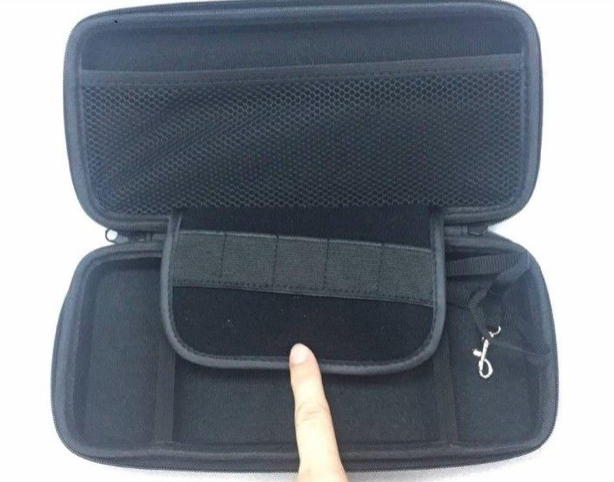


 Metropolis